

Okay, let's talk about the upcoming 15th National Games in China. Slated for November 9-21, 2025, across Guangdong, Hong Kong, and Macao, it's being billed as a landmark event, a showcase of regional integration. But is it? Or is it just a really, really big sporting event with some unusual logistics?
The official line is that this is all about "regional connectivity and integration," with athletes crossing borders and streamlined administrative procedures greasing the wheels. And, sure, the cycling race that starts in Zhuhai, traverses the Macao Bridge to Taipa, then hits Hong Kong's Lantau Island before circling back to Zhuhai sounds impressive. Huang Mingzhong, director of the organizing committee, says every inch of pavement tells a story of regional collaborative development. Maybe.
But let's dig into the numbers. The Hong Kong-Zhuhai-Macao Bridge, opened in 2018, has seen over 93 million passenger trips and 19 million vehicle crossings as of October 22nd of this year. That's a lot of traffic. The Games are touting the "no-brake" clearance experience for athletes, with cyclists passing through border ports six times without stopping. This is thanks to "soft connectivity" – streamlined admin. But the question is, how much of this "seamless clearance" is performative? Are they really streamlining processes, or just rolling out the red carpet (or, you know, green channel) for the Games participants?
The marathon, another cross-border event, will see runners traversing the Shenzhen Bay Bridge without pausing for travel documents. Again, the focus is on ease of movement. Yeung Tak-keung, head of the Hong Kong coordination office, emphasizes the joint planning and close coordination required. But what happens after the Games? Will these streamlined processes remain in place for ordinary citizens, or will they revert to the usual bureaucratic hurdles? I've looked at enough of these types of "optimizations" to know that they are usually temporary.
The organizers claim that this cooperation model enhances the Greater Bay Area's competitiveness and fosters people-to-people exchanges. Zhang Zhihua, an official overseeing coordination, even says the streamlined customs process "connects people's hearts." I'm sorry, but I'm not buying that. Customs agents don't usually connect to my heart. (Though one did once ask me if I had any fruit. That was weird.)
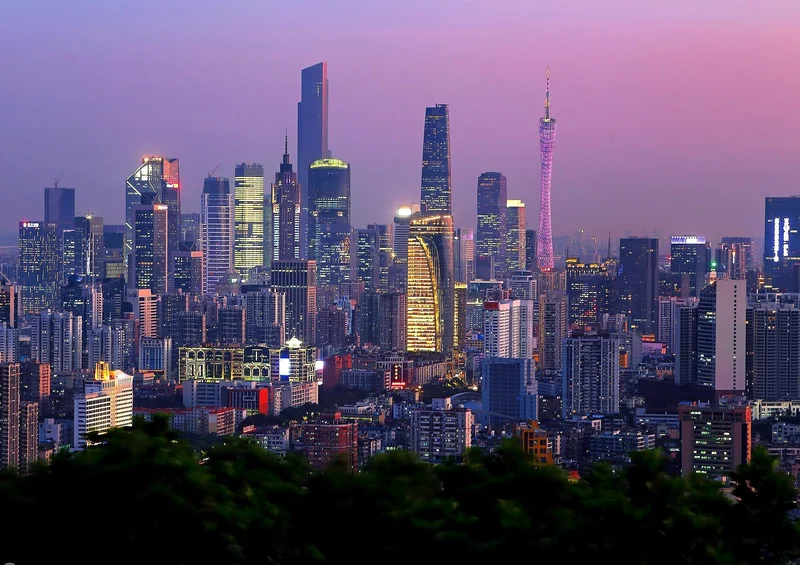
Then there's the claim that the "spirit of integration is already taking root." Apparently, 500 young people from the three regions participated in a health run event in Guangzhou earlier this year to promote the Games. Jimmy Lee Cho-wai, a former Hong Kong track team member, said running with friends from across the Greater Bay Area "strengthens our sense of national identity." Okay, that's a bit much, even for sports PR.
The Games themselves are massive. Over 20,000 athletes are expected to compete across 105 venues. That's a logistical nightmare (or, I guess, dream for event planners). Guangzhou has handled arrivals and departures for about 1,600 groups of participants. Shenzhen airport has processed over 1,600 competition-related flights and 5,600 passengers. At the Hengqin border checkpoint in Zhuhai, around 1,300 athletes and staff have entered through special channels. China's upcoming 15th National Games build momentum as athletes arrive in host cities
The Athlete Experience
Hotels in Guangzhou are stepping up preparations, offering high-calorie meals and extended buffet hours for technical officials. Peng Weidong, a hotel manager, said their dinner buffet, which used to close at 10 PM, is now open until 11:30 PM. That's dedication. I wonder what the athletes think of all of this. I mean, are they just here to compete, or are they actively buying into this narrative of regional integration? Are they even aware of the political subtext?
Also, let's not forget the actual sports. Chen Yiwen and Lin Shan of Guangdong already snagged gold in the women's 3m synchronised springboard diving event. So, it's not just about political messaging; it's about athletic achievement, too. It is possible that the two can be true at the same time.
The last edition of the National Games in 2021 saw over 12,000 athletes compete in Shaanxi. This year's Games are even bigger, more complex, and more politically charged. The question isn't whether they'll be a success in terms of athletic competition. The real question is whether they'll achieve their stated goal of fostering regional integration, or whether they'll just be a temporary spectacle that fades away once the closing ceremony ends.
Soft Power or Sleight of Hand?
Here's the thing: "soft connectivity" only works if it's genuine. If it's just a Potemkin village designed to impress the outside world, it's not going to have a lasting impact. The numbers on passenger trips across the bridge are impressive. The anecdotes about athletes bonding over health runs are… less so. The real test will be whether these Games lead to tangible, long-term improvements in cross-border cooperation and integration. Until then, I'm filing this under "interesting, but needs more data.
标签: #guangzhou