It’s easy to think of Macau as a fantasy land. A place of impossible luck and staggering loss, where the clatter of chips and the silent tension of a baccarat table define reality. You can almost picture Colin Farrell walking through a Cotai casino, a place he came to know intimately. In fact, To play a desperate gambler, Colin Farrell lived in a Macau casino for two months, soaking in what he called the "tonality of the gambling world" for a new film. The city glitters. It hums with the energy of risk, a neon-drenched promise of fortune floating in the South China Sea.
But last week, the sound that mattered most wasn’t the spin of a roulette wheel. It was the sound of a door quietly closing. The sound of silence.
All About Macao, one of the city’s last independent news sources, published its final issue. After 15 years of reporting, it signed off with a simple, heartbreaking headline: “Take care and goodbye.” The reason? An environment of “increasing pressure and risks,” a government campaign that saw its registration revoked, its reporters barred from the legislature, and its funding dry up.
When I first read their farewell note, I honestly just sat back in my chair, speechless. This wasn't just a business shutting down. This was a network node being deliberately unplugged. This is the kind of event that reminds me why I got into this field in the first place—to understand the systems that power our world, and to sound the alarm when they're being rewired before our very eyes.
The System Reboot
To understand what’s really happening in `Macau China`, you have to stop thinking of it as just a city and start thinking of it as a complex, integrated system—an operating system for society. And right now, that OS is undergoing a fundamental reboot. The closure of a newspaper isn't a bug; it's a feature of the new version being installed.
For two decades, Macau’s code was written around a single, chaotic function: gambling. It was an open, volatile, and wildly lucrative protocol that made the `macau casino` industry the largest on the planet. But that chaos, that unpredictable flow of capital and the flashy displays of wealth it created, has become intolerable to its system administrators in Beijing. Chinese leader Xi Jinping has been clear, calling for "economic diversification" and an end to the city's reliance on the baccarat table.
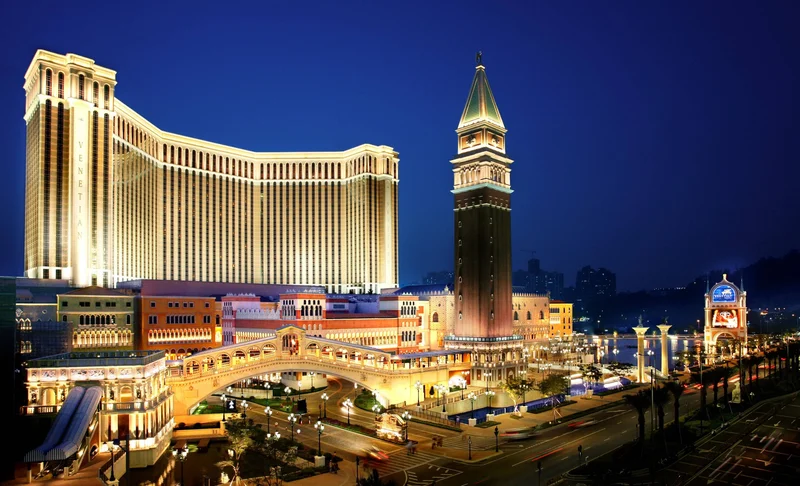
The new directive is a pivot so dramatic that the Gambling hub Macau bets on healthcare tourism. A "resort hospital" is opening inside a Hollywood-themed casino. Let that sink in. They are literally building a new system on the hardware of the old one. This is a move from a decentralized, almost wild-west economic model to a centralized, clean, and highly controllable one—in simpler terms, they're trading the unpredictable energy of the casino floor for the sterile precision of an operating room.
This isn't just an economic shift; it's an ideological one. It's about control. A state-sanctioned, high-tech medical industry is predictable. It aligns with the national narrative of "common prosperity." It doesn't create billionaire gambling tycoons who might get out of line. It creates a manageable, data-rich ecosystem that can be monitored and directed from the top down. But what do you need to ensure a smooth system reboot? You need to silence the error messages. And that’s what outlets like All About Macao were. They were the system's debug log, reporting on bugs, inefficiencies, and power failures. Shutting them down doesn’t fix the problems; it just turns off the notifications.
Information in a Closed Loop
This move to control the flow of information is hardly new. It’s a story as old as the printing press. For centuries, power was maintained by controlling who could print and distribute ideas. Today, the "press" isn't just a machine; it's the entire information ecosystem—journalists, social media, legal frameworks, and the very expectation of a free exchange of ideas. What we're witnessing in Macau, and what we’ve already seen in `Macau Hong Kong` with the gutting of outlets like Apple Daily and Stand News, is the 21st-century version of seizing the printing press.
The playbook is chillingly methodical. First, you use legal tools to delegitimize the press, revoking licenses and declaring candidates "unpatriotic." Then you apply economic pressure, scaring away advertisers and donors. Finally, you use national security laws to make the personal risk for journalists unbearable. The result is a closed-loop information system, where the official narrative is the only one permitted. This isn't just about one newspaper in a city most people only know for its `macau hotel` deals—it's a live-fire test of a new model of societal management, one where the state acts not just as a governor but as the chief architect of the entire economic and informational reality.
It raises profound questions for all of us. As Macau is being reshaped into a sanitized hub for medical tourism, what happens to the soul of the city? Can a place truly innovate and thrive when its critical voices are silenced? And what is the responsibility of the global community, of the tech companies and investors who will inevitably be drawn to this new, "stable" Macau? Do we plug into this closed system, ignoring the fact that its stability is built on the erasure of dissent?
The pressure to conform is immense. We saw it in the arrest of Au Kam San, one of the city's longest-serving pro-democracy lawmakers, on national security charges. We see it in the low turnout for legislative polls after a dozen candidates were disqualified. The signal is unmistakable: the system will not tolerate dissent. The old OS is being deprecated, and all incompatible software will be uninstalled.
You Can't Patch a Human Spirit
Here’s the thing about information, though. It’s a bit like energy. You can’t truly destroy it; you can only change its form. Beijing can build the most sophisticated, top-down, closed-loop system imaginable. They can shut down every newspaper, disqualify every dissenting voice, and rewrite the city’s entire economic purpose. But you can’t patch the human desire for truth. You can’t code away the impulse to ask "why?" An idea, once sparked, becomes a ghost in the machine—an unerasable bit of data that persists in the memory, waiting for a chance to be read again. The silence in Macau today is loud, but the memory of what was lost, and the hope for what could be, is even louder.
标签: #macau