

That 'Leaked' Skunk Works Craft? The Data Suggests It's a Deliberate Signal.
The internet’s defense-analysis sector—a sprawling ecosystem of professionals, amateurs, and outright fantasists—is currently consuming a new set of data points. On or around October 3, 2025, a YouTube channel calling itself "Uncanny Expeditions" posted footage of a decidedly uncanny object being tested at Lockheed Martin’s Helendale Radar Cross Section (RCS) Test Range. The video, which spurred reports like Mysterious Object Spotted At Lockheed Martin’s Helendale Radar Cross Section Test Range - The Aviationist, shows a dark, manta-like shape mounted on a pole, turning slowly under the harsh Mojave sun. The immediate reaction was predictable: a flurry of speculation about a top-secret prototype, a next-generation fighter, or perhaps something else entirely.
But when you strip away the breathless commentary and analyze the metadata of the event itself, the narrative of an accidental "leak" begins to look statistically improbable. The object, a blended-wing body with a peculiar blue patch on its dorsal side, was not being flown. It was mounted on a pylon (a standard procedure for RCS testing) and the test was conducted in broad daylight. The filmer, who claims to have been on public land, was not stopped. In fact, a Reaper drone was observed circling overhead, which tells me one thing with near-certainty: range security was fully aware of the observer. They knew they had an audience.
This isn't a lapse in Operational Security. I've analyzed corporate and state-level information control strategies for years, and this event has all the hallmarks of a controlled release. A genuine "black project" test would not happen in clear daylight with a known observer nearby. The test would be scrubbed, or the observer would be paid a visit. The fact that the test continued unimpeded is the single most important data point in this entire affair. It transforms the event from a security breach into a broadcast. The question, then, is not what the object is, but why we were allowed to see it.
The Anatomy of a Non-Leak
Let's deconstruct the variables. First, the location: the Helendale RCS range is the domain of Lockheed Martin Skunk Works, an organization whose very name is synonymous with impenetrable secrecy. This is the group that built the U-2 and the F-117 in near-total silence. The idea that they’ve suddenly grown careless is, frankly, absurd. Skunk Works doesn’t make mistakes like this. This is the second publicly documented incident of this nature at this site in about four years—or to be more exact, the second one we know about since the 2021 sighting. This pattern suggests a potential shift in strategy, not a recurring failure.
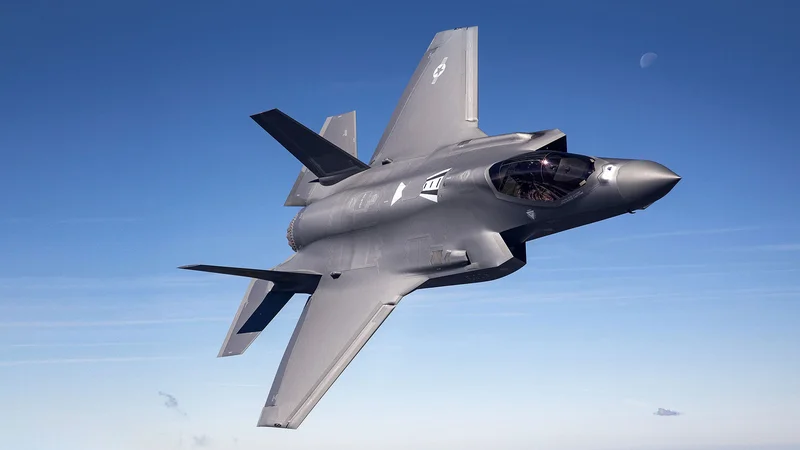
Second, the methodology of the test. Mounting a test article upside down on a pylon is standard practice. It’s done to simulate the perspective of ground-based radar looking up at an aircraft, minimizing interference from the pylon and the ground itself. The object's movement on the pole is consistent with a routine measurement of its radar signature from various angles. This tells us the object is likely a non-flying shape, a component, or a technology demonstrator—a piece of a puzzle, not the whole puzzle. Some have noted it resembles a section of an F-35 fuselage, inverted. This is less about testing a new plane and more about testing a new idea.
This brings me to a methodological critique of the public reaction. The "data"—the video itself—is being analyzed in a vacuum. Everyone is focused on the object, debating whether it’s a successor to the Boeing Bird of Prey or something out of science fiction. They are missing the context of its collection. This is like analyzing a single stock trade without looking at the market volume or the news leading up to it. The most telling data isn't in the pixels of the video; it's in the circumstances of its recording. Why would an organization that lives and dies by secrecy allow its work to be filmed?
And this is the part of the analysis that I find genuinely puzzling from a purely operational standpoint, unless you reframe the entire event. If you assume the goal was secrecy, every action is a failure. But if you assume the goal was signaling, every action is a resounding success.
Parsing the Signal
If we operate under the new hypothesis—that this was a deliberate signal—the picture becomes much clearer. This is a form of geopolitical communication, conducted not through diplomatic channels but through a YouTube video. It’s a message intended for a very specific audience: strategic competitors. Think of it as a poker player intentionally letting an opponent see one card. The card isn't the whole hand, but it’s enough to make them second-guess their strategy, to wonder what other cards are being held, and perhaps to over-invest in a response.
The object itself is the content of the message. The diamond or manta shape points toward continued U.S. investment in low-observable, blended-wing designs. That strange blue area on its surface? It could be a new type of radar-absorbent material, a novel sensor aperture, or an advanced electronic warfare component. We don't know, and that's the point. The ambiguity forces adversaries to dedicate intelligence, research, and development resources to countering a threat that may not even be the primary one. It is an exceptionally cost-effective way to impose R&D costs on another nation. It's cheaper than building a full fleet of new aircraft, but it achieves a similar strategic effect in the minds of foreign military planners.
The online furor is a crucial part of this strategy. The chatter across social media amplifies the signal, laundering it from a piece of potential propaganda into a "grassroots" discovery. It gives the Pentagon and Lockheed Martin Corporation plausible deniability while ensuring the message is received and debated globally. The entire ecosystem of defense bloggers, analysts, and enthusiasts becomes an unwitting accomplice in the information operation. And let's be clear, this kind of subtle flexing absolutely has an impact, not just on geopolitical rivals, but on things as mundane as Lockheed Martin stock, which often responds to the perception of technological dominance. It’s a powerful tool for a company whose business is, at its core, the projection of future strength.
What we witnessed wasn't a "leak." It was a piece of meticulously crafted corporate and military theater, performed on a remote desert stage for a global audience.
The Signal-to-Noise Ratio is 1
Let's dispense with the romance of it all. This wasn't a lucky shot by an intrepid explorer who stumbled upon a secret. It was a calculated act of strategic communication. The object in the Mojave is a ghost, a carefully constructed piece of FUD (Fear, Uncertainty, and Doubt) aimed directly at Beijing and Moscow. Lockheed Martin and the Pentagon didn't fail to protect a secret; they succeeded in planting a very expensive idea in their rivals' heads. They used a YouTuber as a free, deniable delivery system for a multi-billion dollar message. It’s not an OPSEC failure. It’s the new face of information warfare, and it's brilliant.
标签: #lockheed martin