It’s almost impossible to look at the numbers and not feel a sense of vertigo. A company named Oklo, trading under the ticker OKLO, has seen its stock price rocket up an astonishing 1,130% in the last year. It now boasts a market capitalization of $20 billion. That’s more than some established industrial giants.
The catch? Oklo has zero revenue. Zero. It has yet to deliver a working prototype that proves its core technology can work at scale. On paper, this looks like the very definition of a speculative bubble, a "meme stock" frenzy fueled by online hype and disconnected from any fundamental reality. And maybe the cynics are right.
But I don't think they are. When I first saw that chart, my initial reaction was pure, unadulterated disbelief. But then, as I dug deeper, a profound realization began to dawn on me, and it’s the kind of intellectual thrill that reminds me why I got into this field in the first place. This isn't just a stock story. This is a story about the future, and we are watching the market attempt to price it in, live, in real-time.
What if that $20 billion figure isn't a valuation of a company, but a valuation of a problem? What if it's the first real, tangible financial signal of an epic shift in our civilization's energy needs?
The Pressure Gauge on Reality
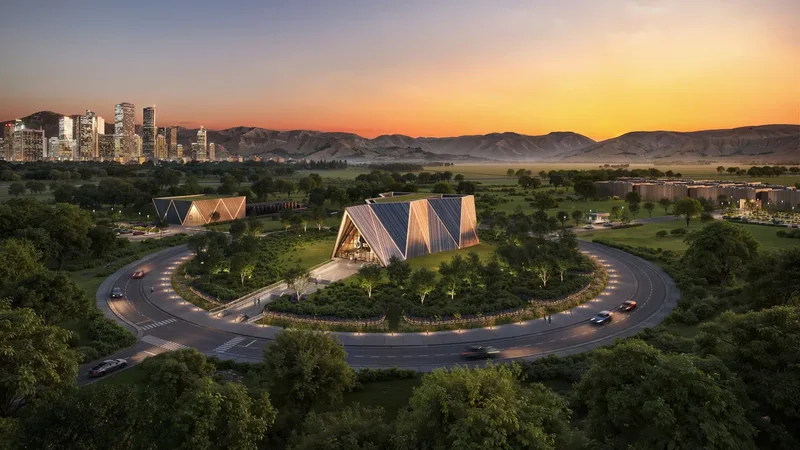
Let’s be clear about what Oklo is trying to do. The company designs and hopes to build small modular reactors, or SMRs. In simpler terms, think of these not as the colossal, sprawling nuclear power plants of the 20th century, but as compact, almost "plug-and-play" fission reactors that can be built in a factory and deployed directly where power is needed—like next to a massive new data center.
This is the key. The entire phenomenon of Oklo is inextricably linked to the explosive growth of artificial intelligence. We are building a new digital world, one that thinks and learns and creates. And that world is ravenously, insatiably hungry for one thing: electricity. The sprawling server farms that power our AI models are becoming one of the largest single drivers of new energy demand on the planet. I’m talking about a need for power so immense and growing so quickly that our existing grid—a patchwork of fossil fuels, solar, and wind—is already showing signs of strain, the speed of this is just staggering and it means the gap between what we have and what we will need is widening faster than we can even comprehend.
This is why looking at Oklo through the lens of a traditional stock is a mistake. It’s like trying to measure the pressure in a steam engine with a ruler. The stock price isn't reflecting current profits; it's acting as a pressure gauge for future demand. That $20 billion isn't for a product. It's a desperate, collective bet that someone will solve the AI energy crisis. Is this irrational exuberance, or is it the market finally waking up to a tectonic shift that technologists have been warning about for years? Prediction: Here's What's Next for High-Flying Oklo Stock in 2026
Building the Power Plants for a New World
We’ve seen this movie before. In the late 1990s, companies like Cisco Systems were given astronomical valuations long before their revenues fully justified them. Why? Because investors understood they weren't just selling routers; they were building the very plumbing of the internet. They were laying the foundation for the digital economy. Today, we see a parallel. We’re not just building AI models; we’re building a new kind of intelligence, and Oklo is one of the few companies bold enough to propose building its power plants.
Of course, this path is littered with immense challenges. We’re talking about nuclear fission. The regulatory hurdles are enormous, as they should be. Public trust must be earned, not demanded. The technical execution has to be flawless. And we still don’t have concrete details on Oklo’s unit economics, a critical piece of the puzzle that remains frustratingly opaque. How do we, as a society, bridge this chasm between the incredible financial faith being shown by the market and the hard, slow, painstaking reality of engineering and deploying nuclear reactors? What happens if the technology takes a decade longer than the hype-cycle allows?
These are the right questions to ask. But to dismiss the entire phenomenon as a "meme stock" is to miss the profound signal in the noise. It’s a grassroots recognition, bubbling up from forums and individual investors, that the future we are all so excited about—a future of intelligent assistants, of medical breakthroughs powered by AI, of scientific discovery accelerated beyond our wildest dreams—has a physical cost. That cost is energy. Clean, reliable, 24/7 baseload power. And right now, advanced nuclear fission is one of the only technologies on the drawing board that can plausibly deliver it at the scale AI demands.
The Price of a Necessary Dream
In the end, whether Oklo itself succeeds or fails is almost secondary. The $20 billion valuation is a flare shot into the night sky, illuminating a stark reality: our digital ambition has outpaced our energy infrastructure. This isn't a bubble; it's a down payment. It's the price of a necessary dream. The market is screaming for a solution, and it has placed its bet not on a balance sheet, but on a vision. This is the kind of bold, terrifying, and utterly inspiring moment that defines a technological era. We are finally pricing in the cost of building tomorrow.
标签: #oklo